Striking Distance Keywords: Rewrite Your Way to Page One
Summary
Striking distance keywords sit between positions 4 and 20, close to page one but not yet capturing real traffic. The fastest path forward is usually a content fix, not a link-building campaign. This guide covers how to pull your list from Google Search Console, identify the specific writing problem on each page, and make changes that show ranking movement within weeks.

Your striking distance keywords are the search queries where your pages already rank but not high enough to capture real traffic. Position 11, 14, or 17. Google has decided your content is relevant. It just has not decided it is better than the pages above it.
That gap is almost always a writing problem, not a links problem. Most SEO advice tells you to build more links or publish more content. This guide takes a different approach: fix the page you already have.
What "striking distance" actually means for your content
The term refers to any keyword where your page ranks between positions 4 and 20. Technically in Google's results, getting attention from the algorithm, but not yet in the range where real traffic lives.
Position 1 captures around 27% of clicks for a given query. Position 10 captures roughly 2.5%. Move a page from position 12 to position 6, and you can multiply its traffic five to ten times without a single new backlink.
That gap is not primarily about authority. When your page is already ranking in this range, Google has made a judgment: this page is relevant. What it has not decided yet is whether your page answers the query better than the pages sitting above it.
For writers, that distinction matters. Because answering a query better is exactly the kind of problem that is fixable in an afternoon.
How to pull your striking distance list in 10 minutes
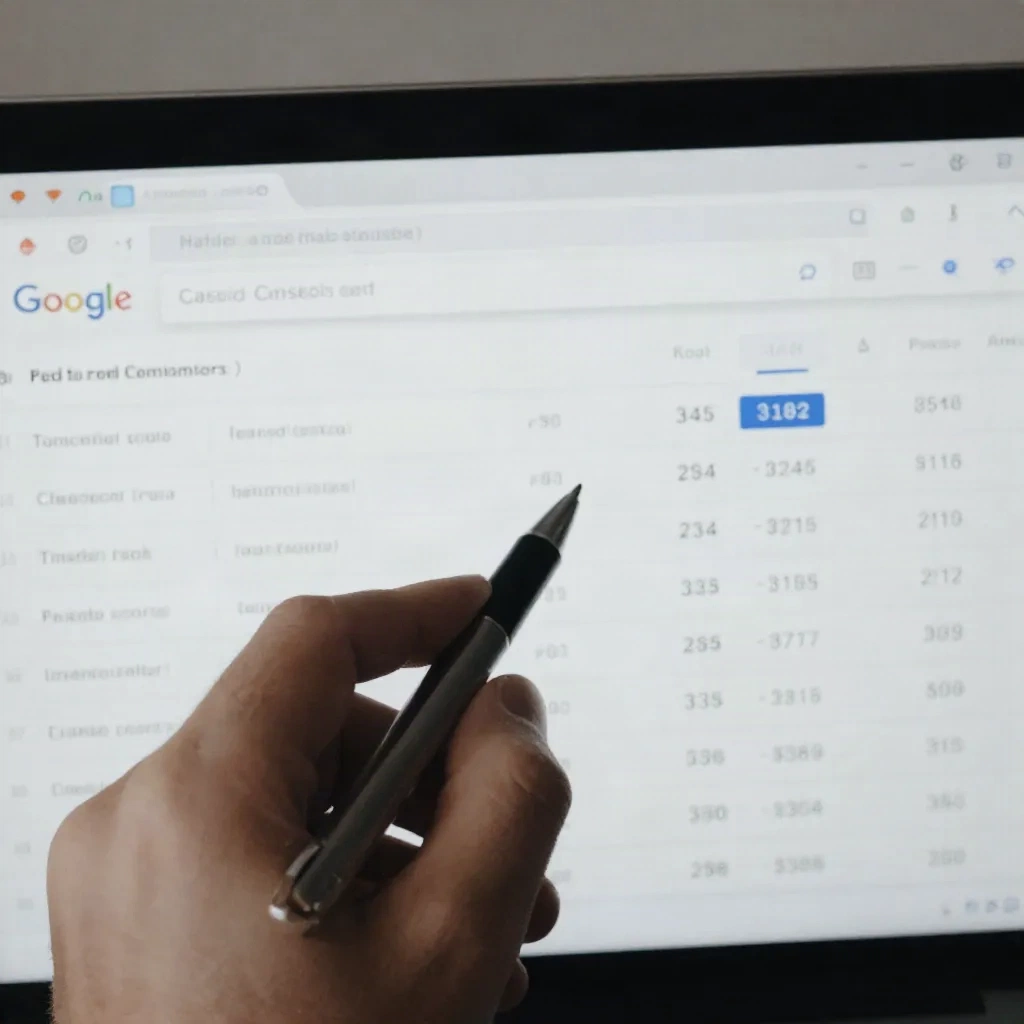
Open Google Search Console. Go to the Search results report and add a filter for Position: greater than 3, less than 21. Sort by impressions, high to low.
What you are looking at is every keyword where Google already shows your pages, just not near the top. Export the list. Drop it into a spreadsheet with four columns: keyword, URL, current average position, and impressions over the last 90 days.
Now add a fifth column: search volume, pulled from any keyword tool you already use. This is where prioritization happens. Focus on keywords with the highest combination of search volume and impressions. If Google is already serving your page 3,000 times per month for a query that gets 8,000 monthly searches, you have meaningful upside with a relatively small content fix.
Ignore keywords where the search volume is low enough that even a position 1 ranking would not drive meaningful traffic. Save those for later. Work on the pages where the gap between current reality and potential is biggest.
The three writing problems that keep pages stuck between ranks 4 and 20
Once you have pulled your list, the question shifts: why is each page stuck here? In most cases, it comes down to one of three things.
The intro does not match what the searcher expects. Open any of your striking distance pages and read the first 150 words. If someone searched for your keyword and landed here, would they immediately know they are in the right place? If the opening 100 words explain background context instead of addressing the query directly, that is a relevance signal problem. Google sees users leaving quickly, and that behavior reinforces the current ranking.
The page covers the topic but not the subtopics. Open the top three pages ranking above you for your target keyword. List every H2 and H3 they use. Now compare that list to yours. The sections you are missing are not optional extras. They are signals that your page is less complete than the competition. A page ranking at position 11 for "professional email follow-up tips" that does not address timing or subject line length is simply less useful than the pages above it.
The title tag does not earn the click. Click-through rate influences ranking. If your page sits at position 7 but generates a CTR significantly below the baseline for that position, it registers as a signal that the result is not satisfying users. Before you touch a word of body copy, test a better title tag. More specific, more direct, with the keyword appearing early. Results on this lever often show up in two to three weeks.
The edit that moves the needle most
The highest-return edit for most striking distance pages is the introduction. Not a full rewrite, a focused reset of what the first 80 to 100 words say and how quickly they say it.
Read the current intro out loud. Ask two questions: Does this immediately confirm to the reader that they are in the right place? Does it get to the actual content within 80 words? If the answer to either is no, that is the fix.
A good intro for a striking distance page does three things: it mirrors the searcher's specific situation, it signals what the page will deliver, and it starts delivering it before the reader has any reason to leave. Not a preamble. Not a definition of the topic. The thing itself, immediately.
For a content writer, this is fast work. A tighter intro takes 20 minutes when you already know the subject. The ranking impact, when the keyword sits between positions 6 and 10, often shows within three to six weeks of Google recrawling the page.

When to fix the intro and when to restructure the whole page
The position range tells you which type of fix to run.
Between positions 4 and 8, the intro rewrite and title tag refinement are usually enough. The page has sufficient authority. It just needs to signal relevance more clearly and earn a better CTR. A focused one-hour editing session handles most of this.
Between positions 9 and 20, you are probably missing content, not just clarity. In that range, the pages above you are covering the topic more completely. That means adding sections, not just sharpening the ones you already have. Look at the structure of the top three results and identify the subtopics they cover that you do not. Add those sections. Write them well. Each new section should earn its place by being genuinely useful to the searcher, not by padding the word count.
Internal linking is worth running in both scenarios. If you have 15 or 20 other pages on your site that could naturally mention this topic, each one is a vote. Adding three or four contextual internal links with anchor text that matches your target keyword consistently shifts pages two to three positions over the following weeks. It takes less than 30 minutes and has a real effect.
What to track after you make the changes
Give any content update four to six weeks before drawing conclusions. Google's crawl and re-evaluation process takes time, and changes that look flat at week two frequently produce movement by week five.
In Search Console, monitor three things after each update.
Position for your target keyword, tracked weekly rather than daily to smooth out normal fluctuation. A consistent shift of two or three positions over a month is meaningful. A single-day blip is not.
Impressions, because if these are rising while position holds flat, Google is qualifying your page for more related queries. That typically precedes a position improvement.
CTR, because a rising CTR at the same position is a leading indicator. It means the title tag change is working and the better user satisfaction signal may push the ranking up next.
Make one significant change at a time when possible. If you rewrite the intro, restructure the H2s, update the title tag, and add internal links all in the same week, you will not know which lever worked. A simple log of date, change made, and URL takes two minutes to maintain and saves significant time when you are trying to repeat what worked on the next page.
What rarely helps at this stage
Adding more words. A page sitting at position 12 that is already 1,800 words thorough does not need to become 2,500 words to rank higher. Word count is not a ranking factor. Relevance is.
The same principle applies to keyword density. If you are checking how many times your target keyword appears in the text, you are solving the wrong problem. Matching the searcher's intent clearly and structurally is what matters, and that has nothing to do with keyword frequency.
What also rarely helps at this stage: minor meta description edits when the current one is not actively misleading, adding images without surrounding context, and updating the publication date without updating the actual content. Freshness signals work when the content underneath them has genuinely changed.
Running this as a quarterly habit, not a one-time fix
Pull your striking distance list once per quarter. Block two and a half hours. Audit the top five pages: read the intro out loud, check the title tag against the actual query, compare your H2 structure against the top three results. That is 30 minutes per page.
Most of what you find will be fixable in a single editing session. A tighter intro, a better title, one or two missing sections, three internal links. The pages that need a structural overhaul will make themselves obvious. They are the ones where the competition is simply doing more.
Apply the same discipline to measuring results. Return to each page after six weeks. Check what moved. Document what the fix was. Over time you build a picture of which levers work on your site and which ones do not. That knowledge compounds in ways that publishing new content rarely does.
The underlying point: your striking distance pages are not failed content. They are almost-there content. The distance between almost there and there is almost always a writing problem, not an authority problem. That makes it your territory.
Sources: Striking Distance Keywords - SEO Testing | Striking Distance Keywords with GSC - Content Raptor